





Duke Lemur Center
Phone: (919) 401-7240
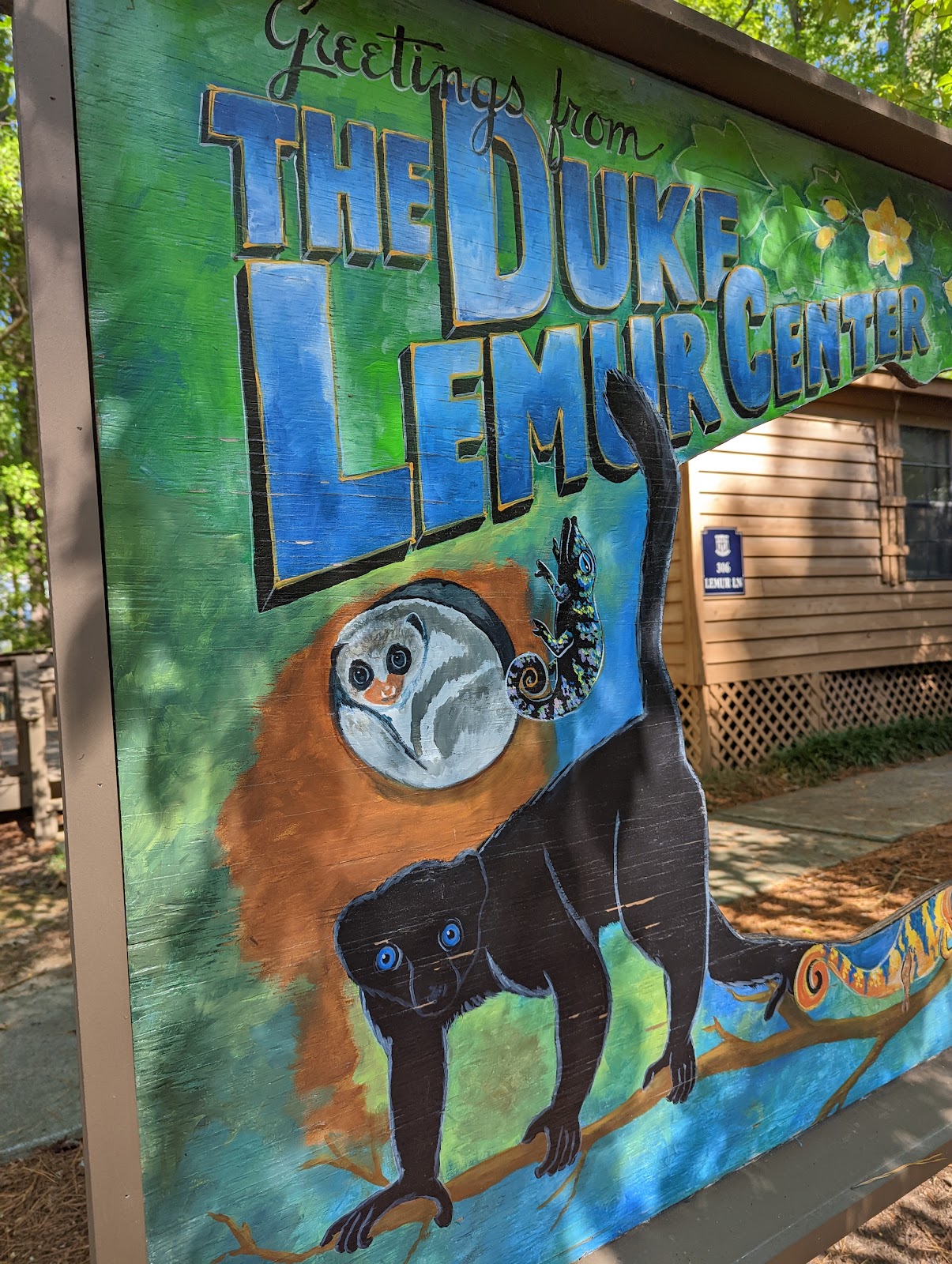
Deep in the heart of the Duke Forest lies the Duke Lemur Center (DLC), a sprawling 100-acre complex that houses over 200 lemurs across 14 different species. Founded in 1966, the DLC is open to the public and educates more than 35,000 visitors annually. Its highly successful conservation breeding program seeks to preserve vanishing species, and its Madagascar Conservation Programs study and protect lemurs, the world’s most endangered group of mammals. Tours are available by appointment in the warmer months, typically May-September.


Hours
Monday: 10:00 AM – 4:00 PM
Tuesday: Closed
Wednesday: 10:00 AM – 4:00 PM
Thursday: 10:00 AM – 4:00 PM
Friday: 10:00 AM – 4:00 PM
Saturday: 10:00 AM – 4:00 PM
Sunday: 10:00 AM – 4:00 PM
Tuesday: Closed
Wednesday: 10:00 AM – 4:00 PM
Thursday: 10:00 AM – 4:00 PM
Friday: 10:00 AM – 4:00 PM
Saturday: 10:00 AM – 4:00 PM
Sunday: 10:00 AM – 4:00 PM
Map
Google Rating
-
A lovely little place that I wish more people knew about! Not only is this a place where lemurs live comfortably and can be viewed by the public during tours, but it is also an extensive, non-invasive research facility working to gain knowledge on these fuzzy, lovable primates. My boyfriend and I went on the self-guided tour together back in September. You're going to want to make sure it's tour season and then buy tickets online. There are different levels of tours, with the self-guided ones being the cheapest (although there are still some volunteers there to answer any questions you have and to make sure the lemurs are safe and such).
The tour guides are very friendly, enthusiastic, and knowledgeable, and the lemurs seem happy and healthy. (They are held to a very high standard of care, and they're allowed to free-range in outdoor enclosures from time to time.) I enjoyed walking around, reading the very informative and visually pleasing signs, looking at the lemurs, and asking questions to the tour guides. The mongoose lemurs and the crowned lemurs have such sweet faces, and it's cute how they groom each other. (Note that the nocturnal lemurs have their own specialized habitat with low lighting, and you have to be VERY quiet and avoid shining lights at them; this is for their health and well-being!)
Their visitor center has a wide variety of souvenirs with which you can commemorate your visit (and support a good cause), from T-shirts and stuffed lemurs to polished ammonite fossils and Duke Lemur Center magazines. Everything was very tidy, and the cashier was friendly. There is also a small room in the visitor center with some lemur skulls on display and some biographies of women in STEM. It's nice to think that young girls might see those displays and be inspired by them to pursue STEM careers.
Overall, I enjoyed visiting. It definitely increased my appreciation for lemurs and increased my awareness of the threats they face. Apparently there is also a Duke Lemur Center Museum of Natural History at a separate location on Broad Street in Durham, but the hours it's open to the public are different and limited. I will have to check that out sometime as well! -
Oh my god, where do I start? We visited the behind the scenes lemur tour as a group of 4, and it was one of the best experiences of our lives. Getting to see lemurs in their natural habitat, watching them do their lemur things just a few feet away from us, was incredible.
Our guide, Anna, was absolutely amazing – so knowledgeable, engaging, and clearly passionate about what she does. The 2 hours completely flew by, and I would have happily stayed even longer.
Thank you for such an unforgettable experience ❤️ -
Wonderful tour, you can tell they really put the well-being of the animals atop the priority list. Jillian was a wonderful tour guide superer knowledge and friendly. Absolutely recommend this if you are visiting the area and interested in learning about lemurs.
-
I had a recent behind the scenes tour here, and it was one of the best experiences of my life! My absolute favorite animal is the aye-aye, and I got exactly what I wanted from this experience! When booking online, you can let the team know what you would like to see and so they can curate a tour based on your interests (this feature is most likely specific to specific tour types, experiment to find out)! My tour guide was Abby (I really hope I remembered her name correctly my memory is horrible, please if i’m wrong correct this), and she came up with something so creative!
First off, if you think you’re directly interacting with or touch any of the lemurs, this is absolutely NOT the case. Do not expect going into this that you get to pet your favorite lemur, it’s not good for them to be that level of domesticated.
Now the great stuff: we went through a full habitat with three different species of lemur, got to see them all run to eat, and saw a bunch of nocturnal lemurs too!! With the personal star of the show being the aye-ayes of course! Abby came up with the idea to include me on getting the aye-aye’s treats ready! We made these neat honey/peanut butter treats for two different aye-ayes! Then we took them directly to them and watched them dig into them! These videos may be good, BUT, in person is just so much more special!! I’ll never forget this one-of-a-kind experience, and i hope i can come back again! Thank you to the whole team!!! -
We completely agree with many of the other reviews here: the Duke Lemur Center is an incredible conservation and research facility, but it’s important to understand that it is not a traditional zoo experience. If you go in expecting large open viewing areas and constant close-up animal interaction, you may be disappointed. However, if you appreciate wildlife conservation, education, and research, this place is absolutely worth visiting.
The outdoor lemur enclosures are protected behind double mesh/wire fencing, and during colder months the viewing in the winter habitats can sometimes be difficult from what I’ve read here. We went in early spring with temps in the middle 80s, the lemurs were somewhat active in their habitats, with about 30% of them choosing the stay inside out of sight.
What really stood out was the educational aspect. The volunteers and guides were engaging, knowledgeable, and clearly passionate about the lemurs and the conservation work being done. You can learn something new every visit, and it’s obvious that the admission fees directly support the care and preservation of these endangered animals.
The experience has more of a museum or educational center feel than an entertainment-focused attraction. Small children may lose interest quickly, especially if they are expecting a zoo-type environment, and if you don’t stop to engage with the guides, you could probably walk through in 15–30 minutes. But for anyone interested in conservation, science, or rare species, it’s a meaningful and worthwhile experience.
The conservation work itself is truly 5 stars, and hats off to the excellent guides I spoke with today





Nearby Businesses

.55 Miles Away
.74 Miles Away

.79 Miles Away

.79 Miles Away
Related Stories

Let’s Talk About Lemurs
Visit the Duke Lemur Center for an unforgettable experience learning all about aye-ayes, blue-eyed black lemurs, grey mouse lemurs and Coquerel’s…

Reasons to Love Durham
We love to love Durham, and we’re counting the ways. Here are 41 of the quirkiest, most quintessential Durham stories and…

How to Celebrate Labor Day in Durham
Labor Day may mark the (unofficial) end of summer, but that doesn't mean the good times have to end.

Discover Durham’s Accessible Visual Art and Science Activities
Plan an accessible trip to Durham centered on educational science activities, interested art exhibits, and engaging museums.

A Guide to Durham’s Accessible Outdoor Activities
Durham's accessible outdoor activities offer visitors many options to enjoy walking paths, adventures, and the natural beauty of the region.

A Guide to Durham’s Accessible Activities
Discover Durham's accessible activities, ADA-compliant venues, and more with this in-depth guide.

Got Tweens or Teens? Here’s How to Blow off Steam in Durham
A foolproof list for "kids" of all ages.

Daytrips from Durham to Explore During Your Stay
With its central location, Durham is the perfect spring board for daytrips all across North Carolina. Stay awhile in the Bull…

Roll Deep with Durham’s Best Group Activities
Traveling to the Bull City with a group? You're in luck. Group activities in Durham abound, from escape rooms and adventure…

A Retiree’s Guide to Exploring Durham
Retirees don’t need to move to Durham to enjoy its many pleasures. Durham is also a great destination for retired travelers…

Duke Lemur Center Coloring Pages
What did the lemur say to the sailor? Aye-aye, captain.


