





What Chef Preeti Waas Loves About Durham
Hear from two-time James Beard Award Nominee Preeti Waas all about her restaurant, Cheeni, The Bar Beej and what’s next for her culinary creations.

Chef Preeti Waas takes us through it all — family, food, history, home cooking and a bit about life, too. Find out what makes the mind behind Cheeni tick and about all the people who make this wonderful restaurant and bar the welcoming place visitors and regulars love. Being a restaurant owner in Durham means being a part of a unique culinary community, one that Waas takes every opportunity to celebrate.
Can you tell us a bit of your personal history? What inspired you to become a chef?
Preeti Waas: I had no intention to be a chef or to open a restaurant. I just enjoy feeding people. I've always done that. I was the one who had all the snacks, people always asked me to bring them. I was the soccer mum with the snacks. I was the Girl Scout leader with the snacks. We were the ones who would host all the holidays at our home.
And, when somebody said you should open a restaurant, I said, sure. And that's how that started.
I'm really not a chef. I just like to cook and feed people. But what that means is different for everybody. To my mind, a chef is one who is qualified to lead a kitchen. And I don't consider myself as leading a kitchen as much as we all just work together. An endeavor of this scale cannot be anything but a team effort.
Tell us about the food you serve at Cheeni - are there any specific dishes that are especially personal to you?
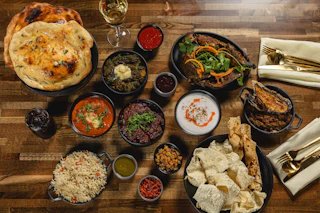
The food that we serve at Cheeni is really not restaurant food. It is the food that I served my children as they were growing up. I cooked some of it back home in India, but I did more eating than I did cooking when I was growing up. I did a lot of baking, but not as much cooking because we have really great cooks in our family.
In terms of what's especially personal about the menu, truly, every one of the items we serve and is listed on a menu is only there because it's personal to us. It's either personal to my children or my husband or me. I've translated food memories and particularly poignant times in my life into dishes.

How do you define hospitality? How does that guide the way you run your businesses?
Hospitality is more than serving people. That is a very big part of it, but to me it is a fluid process and it flows both ways. We love being hospitable to people who understand that we are there to serve them. But we are not here to be servile. That exchange of energy between our guests, our servers, our kitchen and our staff is coalesces into this experience for the guest as well as for us. To me, that is true hospitality.
Our staff is as engaged in the process of serving and hospitality whether they are washing dishes, on the line or actually customer facing. Hospitality is not just a simple description, it's a flow of energy all the way throughout the space. It defines how we run Cheeni. Everybody is engaged in the process.
We we have an open kitchen, which is very unusual for most Indian cuisine restaurants. We enjoy when our guests get to sit at a bar top and and watch the flame in the pan and smell the aromas of the seeds hitting the ghee. The hot ghee spluttering, the aromas and the blooming of spices all adds to the hospitality experience.

Why did you choose Durham for Cheeni? What makes Durham a great food city?
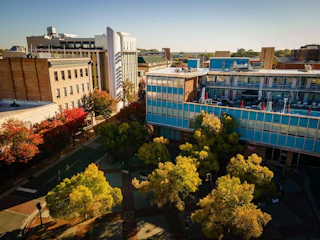
Durham chose me. And Durham chose Cheeni. When we had our location in North Raleigh, easily 20-30% of our guests were driving from Durham and Chapel Hill to come dine with us. When this phenomenal space right in the middle of downtown, a space I've always admired, became available, it was a very easy yes. It was scary yes, but a very easy one.
Simply put, Durham shows up. To our businesses and to protests. To games and to shows at DPAC, Durham Performing Arts Center.

What makes Durham a great food city?
Durham is a great food city because of the patrons – they have proven themselves open to supporting what some would consider fringe cuisines. Durham continue to show up for the food and beverage industry. DPAC and Duke University are huge reasons for restaurants to take a chance on Durham as well.
Every corner that you look at, there's diversity, there's inclusivity and there's a community of chefs. And I wouldn't just say the chefs — diners, chefs, bartenders, servers and the entire hospitality community feels exactly like that: a community.
There doesn't seem to be a sense of competition here. We are all peers of the same industry and we behave like it. And the guest benefits. We are very happy to send folks to one of our neighbors. I'll say it. For instance, chicken tikka masala is not on our menu. But, there are five other Indian restaurants within walking distance of Cheeni, and we very happily send them there. Because if that is what they are looking for and they can find it on one of our peers’ menus, that's what we'd like for them to experience.

What do you love about Durham?
Years ago, I knew Durham as a gritty city. It had some sharp corners, some grit to it and people with a lot of personality. It still retains some of its original grit. And it does not hurt to have Duke University here and Chapel Hill so close by. All of those really do bring in such a diverse community from all over the world. We appreciate our global community in Durham.
Every day is different. Every guest who walks in the door is different. We have our regulars, so we see familiar faces. We have a sense of community. If I can go home at the end of the day tired because I've worked and I've worked well and we served people well, that's success to me.
Where do you like to go on your day off?
I love Seraphine, with Queeny’s being a close second. They are entirely different cuisines and experiences depending on the mood and occasion. The gumbo at Seraphine is what comfort food dreams are made of.
I also enjoy shopping at MODE Consignment, but truthfully there is not a lot of downtime to fully enjoy all that Durham has to offer – it would be nice to make that a priority soon.

What does it mean for Cheeni to be a family affair?
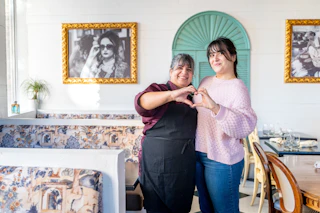
It's actually, truly a family business. My eldest daughter works here as well. It is a small, family business, but I hesitate to call our staff our family because sometimes we take advantage of our family. The people we take advantage of the most are our family. I will not have that kind of culture where you give staff a false sense of belonging that gives you license to demand something of your staff. More hours, having them work on the holiday when they don't want to, for instance — that's that's not something we subscribe to.
What was your inspiration for Bar Beej and the cocktails on the menu?
The Bar Beej is all my daughter, Amy. She is responsible for some of the outrageous ingredients that are in our cocktails.
We have fantastic bartenders who actualize her vision, but she does have a really great palate. The only thing I provide is the space and the ingredients that come from the kitchen. That's what I believe makes our cocktails so successful. There's a through line from our beverages to our food and through our food to our desserts. That is very important, especially when the cuisine is as specialized as Indian regional cuisine.

In terms of the inspiration for the bar name, Beej means seed and everything comes from the seed, everything. You can look at your entire life force as being contained in one seed.
Everything starts from a small idea. The other part of Beej is the beej mantra in yoga, in the whole holistic vision of Indian wellness, speaks to the divine feminine. I want this to be a space where everybody is first and foremost safe.
You can be a single woman coming here. It's not the kind of bar where anyone would come in and feel unsafe. We have a mom energy here. We're making sure that everyone's going to be taken care of. You can come in here and enjoy your adult beverages and know that somebody else is also looking after you.

Congrats on the James Beard nomination - did you expect the bar to receive so much attention?
Two years in a row for Best Chef Southeast. Yes. First nomination for Best New Bar for the Bar Beej. Did I expect the bar to receive this much attention? No. Quite frankly, no.
But once Amy started the beverage program, I knew it needed attention. What we're doing here at Bar Beej is pretty wild and very different from what a lot of bars are doing. Once the menu was being crafted, I knew we had to put a spotlight on it. I'm very thankful that our creativity flows both ways.

Amy and I work very, very cohesively. Two fingers at the same hand is how it feels. Because she has a great palate and I trust her, she has a role in approving what comes out of the kitchen. She's also my daughter and she can be very candid with me.
When Amy is creating cocktails, she brings them to me for my final approval. She knows that I will not hesitate to tell her if something is not working. She takes that feedback and then improves on things. She doesn’t just sit on it and feel discouraged by it.
She took Bar Beej and ran with it, and I for one am cheering her on 1,000%.
Tell us about the newer businesses you opened.
So we have another Cheeni in RTP. It's at the Hub RTP location right smack in the center of the Research Triangle Park. Getting to build it from the ground up was very, very exciting.

A business I did not expect to be opening is Nanny Goat Market, which is a little boutique bodega also at the Hub RTP. We're utilizing their previously unplanned space in the lobby for a boutique bodega where you can buy Q-tips, sunscreen or a coffee filter, or you can also find fresh flowers, wine and gifts — all local goods. The thing that I'm most proud of is the refrigerator and freezers stuffed with ready-to-heat meals made by micro food business entrepreneurs.
It's starting with my staff here at Cheeni in the kitchen. If any one of them have any hopes of opening their own food business, but they lack the resources for opening a kitchen, they get to utilize our kitchen. I will help them with the government processes and getting their licensing and all of those things.
They get to stock the refrigerators and freezers with their products. You could find tamales from the Yucatan, or empanadas or plantains from West Africa. We aim for it to be a global food market.

Are there any traditions you follow when you open a new spot?
In Indian tradition, anytime you occupy a new space, the first thing you cook is something sweet. That invites peace and prosperity and the idea of sharing something sweet. All good things, sweet things.
When we open a new spot, the first thing we make is Prashad. I'm Punjabi, and that's what we serve in gurdwaras. A gurdwara is a temple and everybody is welcome. I love the fact that food from India always has a meaning behind it.
Prashad is also nutritionally dense, it's not just just sugar. The dessert is made with whole wheat flour, ghee, sugar and cardamom. It's like a halva. If people aren't familiar with halva, a little bit goes a long way. The sharing of Prashad is saying that we're sharing our good fortune with you. We're sharing nutrition with you. We're welcoming you into our space.
We celebrate Holi. We celebrate Diwali. I'm hoping to celebrate Lohri, which is a Punjabi harvest festival. What I really believe, is that in this cosmos, you don't even need to have a reason to celebrate.
So if there's something to celebrate, let's celebrate it. But why wait for a holiday? I want to express my gratitude to the community that has welcomed us and to the staff that choose to come to work for us and with us every day. Gratitude for Durham, who has truly welcomed us with open arms. We feel at home here.
I never imagined it. And now I can't imagine not being here. I'm going to take one day at a time and one step at a time.
Recommended Stories


